Side Stretch Exercise for Daily Mobility and Less Stiffness
By JoseeUpdated 4 min read
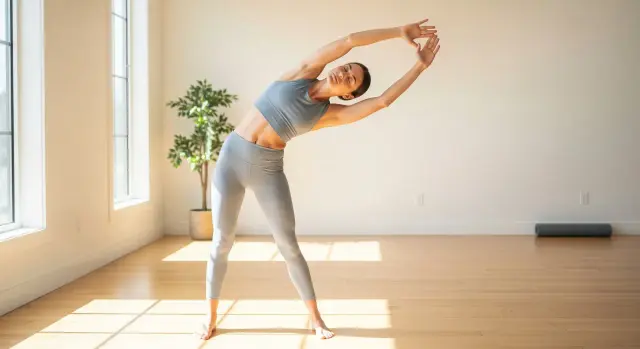
Many adults begin to notice small changes in how their bodies move over time. Reaching overhead, bending to the side, or twisting can start to feel tight or restricted.
A simple side stretch exercise can help improve how your body moves day to day. By gently stretching the muscles along your ribs, waist, and lower back, you can reduce stiffness and make everyday movements feel easier and more comfortable.
Side stretches are especially helpful for supporting posture, easing tension, and maintaining mobility as you stay active. For guided routines that improve flexibility and mobility safely, the WeStretch app provides expert-led stretching programs designed to help you move comfortably every day.
Why Side Stretching Helps Reduce Stiffness
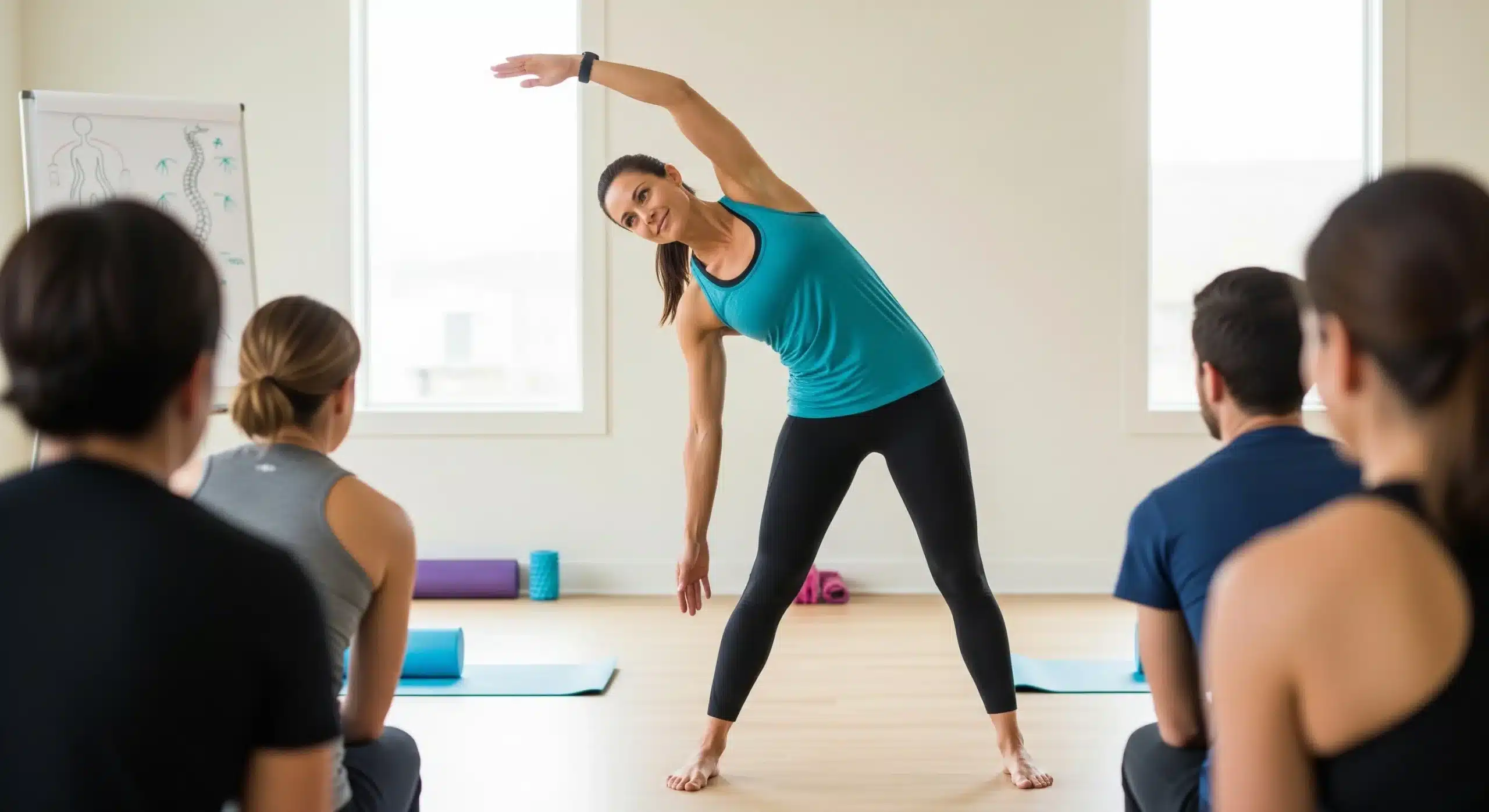
The muscles along the sides of the torso play an important role in stabilizing the spine and supporting everyday movement. These muscles help you bend sideways, rotate your torso, and maintain balance while walking or reaching.
- Reach for items on a shelf
- Turn and look behind you
- Stay balanced while walking
- Move comfortably without strain
Over time, sitting, repetitive movements, or reduced activity can cause these muscles to tighten. This can lead to stiffness in the back, shoulders, and hips.
Practicing a side stretch exercise regularly can help:
- Reduce feelings of tightness in the back and ribs
- Improve posture and alignment
- Support better balance and coordination
- Make bending and reaching feel easier
- Maintain comfortable, everyday mobility
Gentle stretching also supports circulation and helps your body stay loose and responsive throughout the day.
Muscles Worked in a Side Stretch Exercise
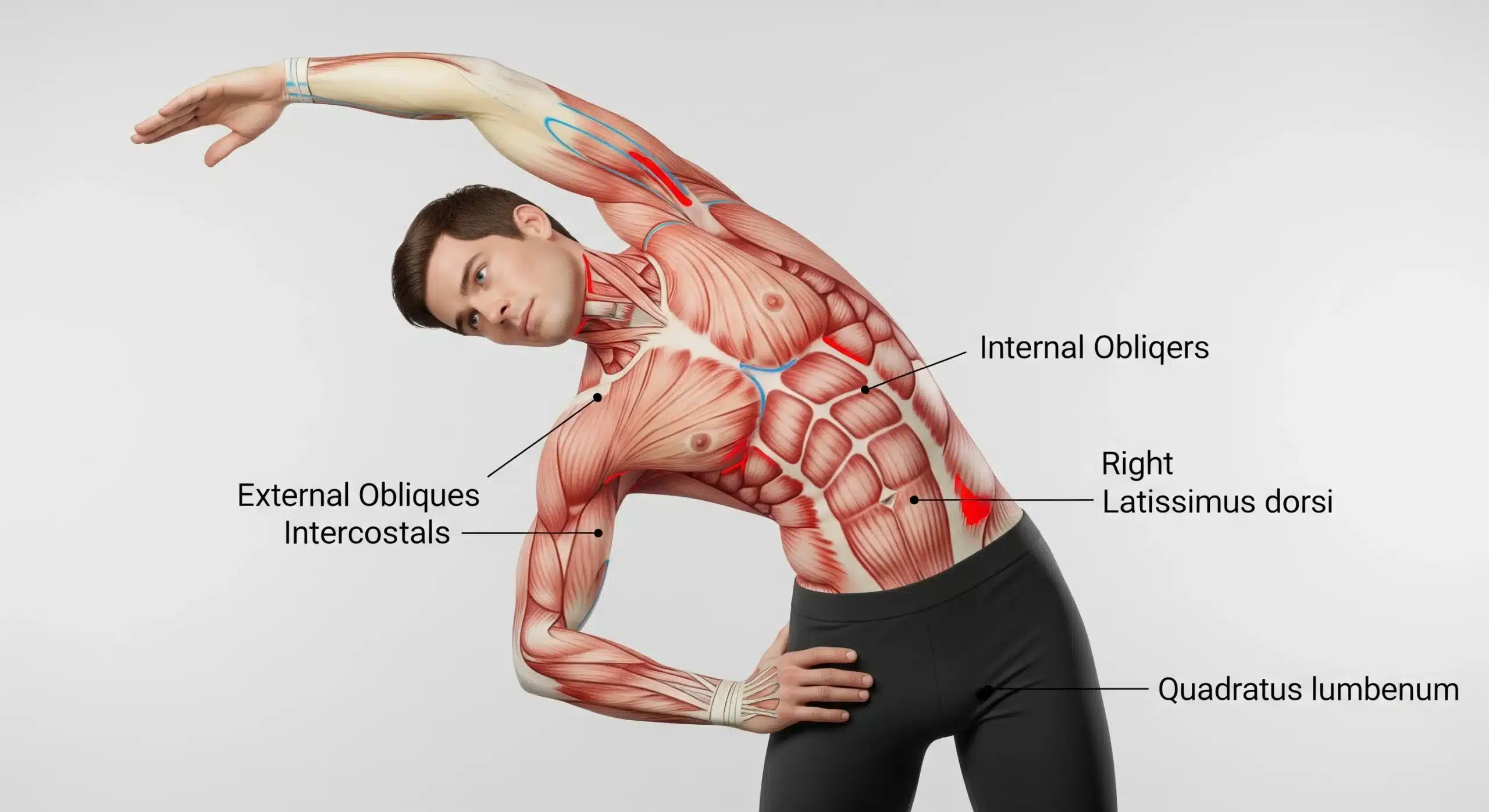
Side stretches target several key muscles that support movement and posture:
- Obliques: Help with side bending and stability
- Intercostal muscles: Support breathing and rib movement
- Latissimus dorsi: Assist with reaching and upper body movement
- Quadratus lumborum: Supports the lower back and spine
Keeping these muscles flexible helps your body move more naturally and reduces strain on the lower back.
Standing Side Stretch for Full Body Mobility
A great option to start your day or loosen up after sitting.
How to do it:
- Stand with feet hip-width apart
- Raise both arms overhead
- Gently lean to one side
- Keep your chest open and avoid twisting
- Hold for 20 to 30 seconds
- Return to the centre and switch sides
Why it helps:
Improves flexibility through the ribs and spine while supporting better posture.
Seated Side Stretch for Gentle Mobility
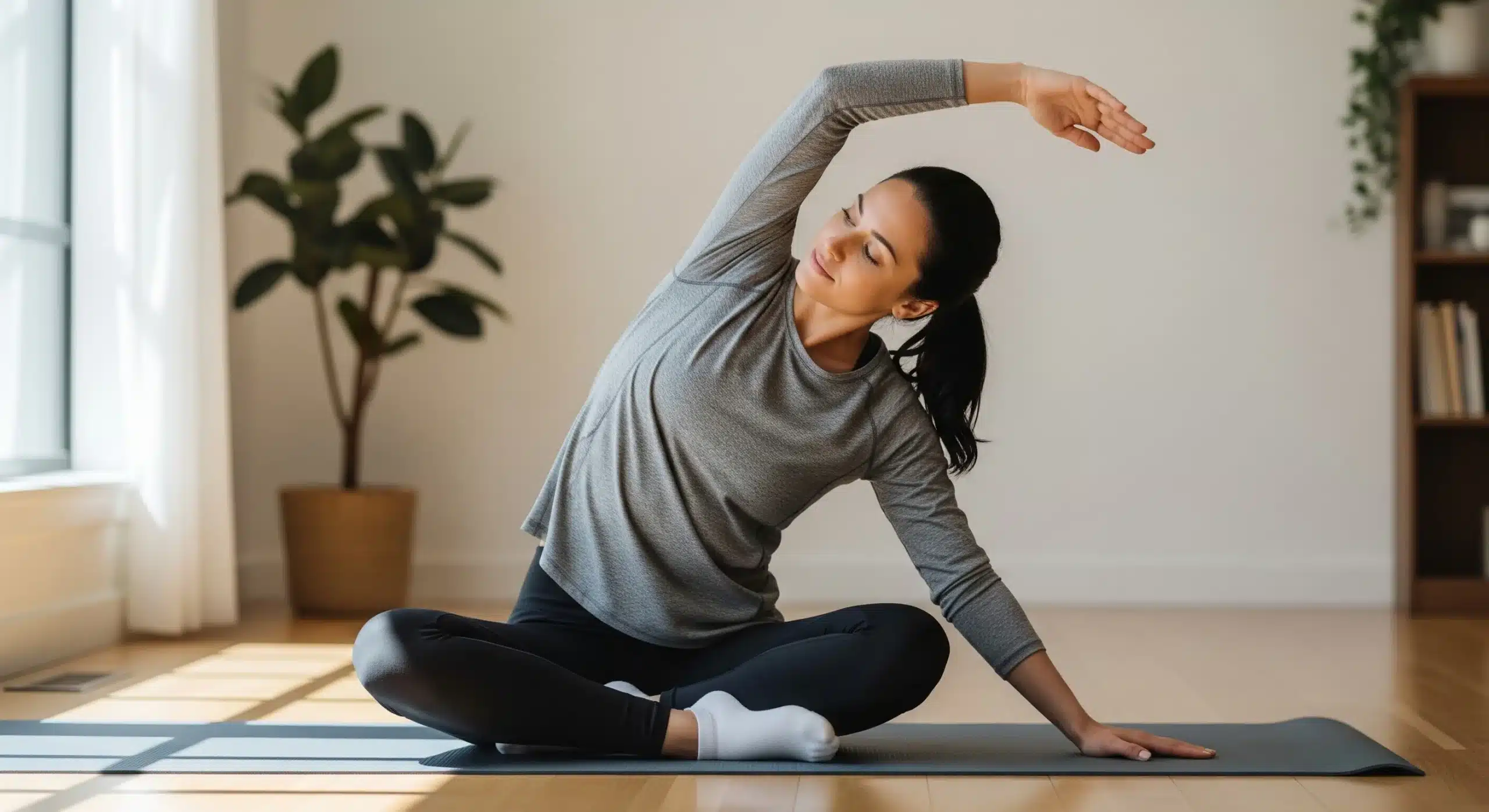
Ideal if you prefer a more supported position or spend long hours sitting.
How to do it:
- Sit upright in a chair or on the floor
- Place one hand beside you for support
- Reach the opposite arm overhead
- Lean gently to the side
- Hold for 20 to 30 seconds, then switch
Why it helps:
Relieves stiffness from sitting and gently improves spinal mobility.
Side Lying Stretch for Relaxed Mobility
A comfortable option for beginners or low-energy days.
How to do it:
- Lie on your side with legs stacked
- Extend your top arm overhead
- Allow your body to lengthen naturally
- Hold for 20 to 30 seconds, then switch
Why it helps:
Provides a gentle stretch without putting pressure on the spine.
Child’s Pose Side Stretch
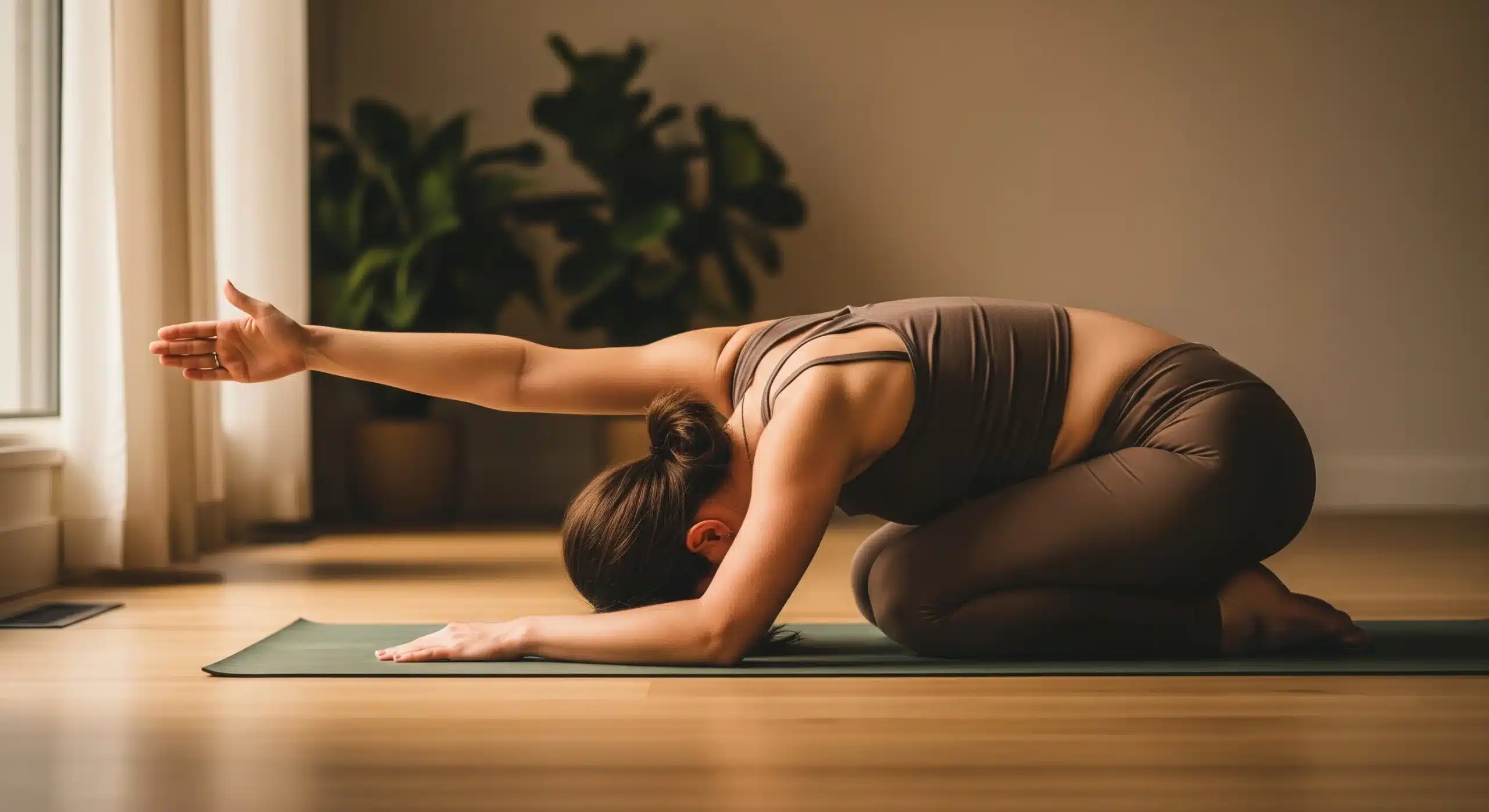
A calming stretch that also supports relaxation.
How to do it:
- Start in Child’s Pose
- Walk your hands to one side
- Keep your hips back toward your heels
- Hold for 20 to 30 seconds
- Repeat on the other side
Why it helps:
Stretches the back, shoulders, and side body while promoting relaxation.
Safety Tips for Side Stretching
Stretching should feel comfortable, not forced. These simple tips help keep your routine safe:
- Move slowly into each stretch
- Avoid bouncing or pushing too far
- Keep your breathing steady
- Stop if you feel pain (a gentle stretch is okay, sharp pain is not)
- Focus on consistency rather than intensity
Small, regular movement is more effective than occasional deep stretching.
Build a Simple Daily Mobility Routine
Side stretches work best when paired with other gentle movements that support your whole body.
A balanced routine might include:
- Light stretching for the back and shoulders
- Gentle hip mobility exercises
- Short daily movement sessions
You do not need long workouts to feel a difference. Even a few minutes a day can help you feel less stiff and more confident in how your body moves.
Make Movement a Daily Habit With WeStretch
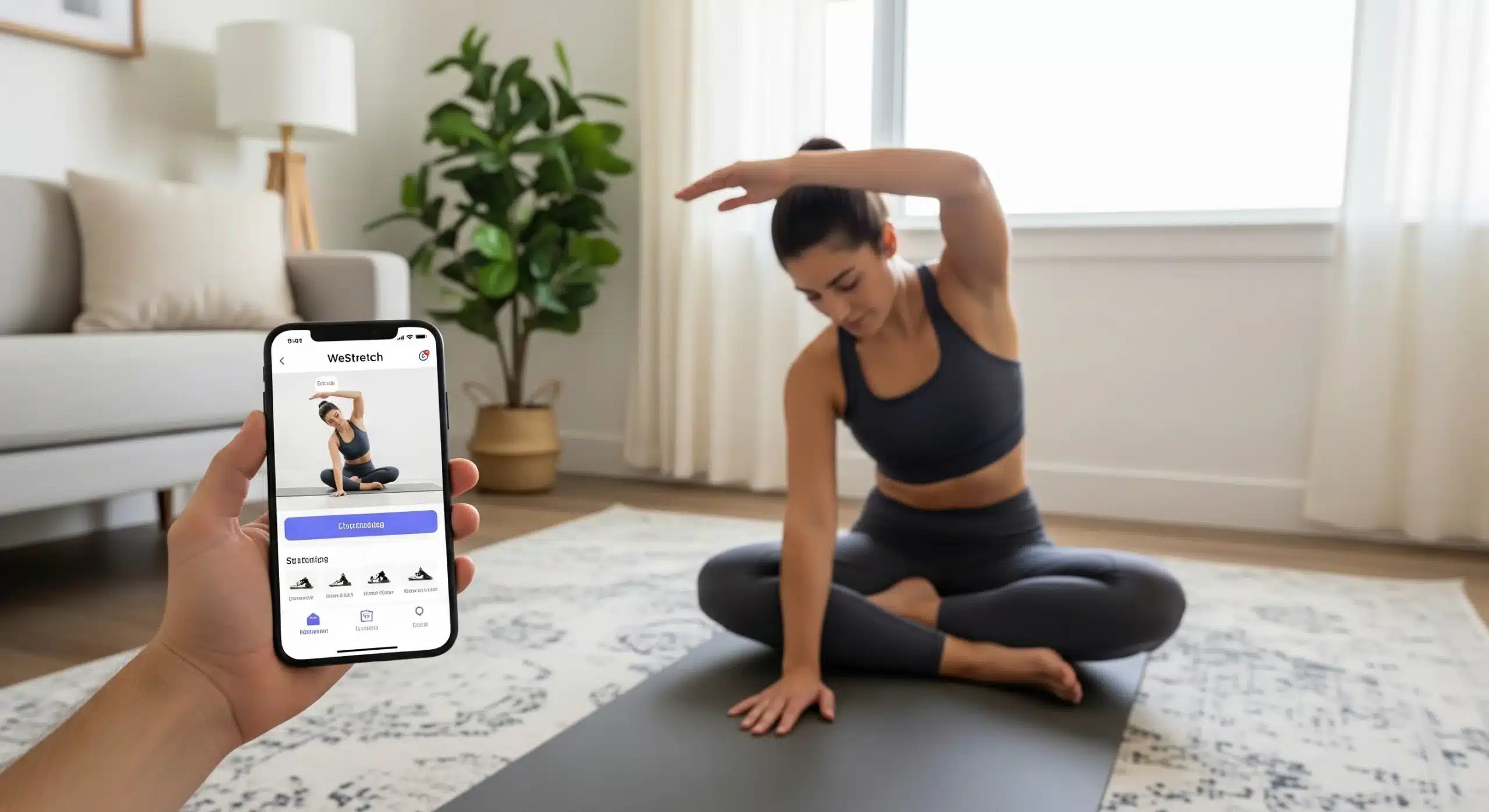
A simple side stretch exercise can make a noticeable difference in how your body feels day to day.
Small, consistent habits are what make the biggest difference over time. A few minutes of movement each day can help you feel less stiff, more balanced, and more comfortable in your body.
That is where WeStretch can help.
The app provides simple, guided routines designed to improve mobility, reduce stiffness, and support safe, consistent movement. It is built for real people who want to feel better in their bodies, not push them to extremes.
With WeStretch, you can:
- Follow easy, step-by-step routines
- Move at your own pace
- Build consistency without overdoing it
- Support long-term mobility and independence
Frequently Asked Questions
What is a side stretch good for?+
A side stretch exercise helps reduce stiffness, improve flexibility, and support comfortable everyday movement.
How often should I do side stretches?+
Gentle stretching can be done daily, especially if you are feeling stiff or sitting for long periods.
Can side stretches help with back discomfort?+
Yes. They help release tight muscles along the sides of the torso, which can reduce tension in the back.
Are side stretches safe for older adults?+
Yes, when done gently and with proper form, side stretches are safe and effective for maintaining mobility.