
Stretches for the Forearm to Reduce Pain
By Josee8 min read

Tight forearms can make everyday tasks like typing, lifting, or even holding a mug feel harder. When these muscles tense up, they can affect your wrist, elbow, hand, and overall grip strength. Simple stretches for the forearm can ease tension, improve mobility, and help prevent discomfort.
Whether your forearms hurt from lifting or from long hours at a keyboard, a few minutes of gentle stretching with WeStretch’s guided routines can make a real difference. In this guide, you will learn how to stretch safely, warm up properly, and support your forearms during repetitive work.
Understanding stretches for the forearm.
Before adding new forearm stretching exercises, it helps to know what these muscles do. The forearm contains many small muscles that control your wrist, hand, and fingers, and they work constantly throughout the day.
These muscles help you:
- Grip weights, bags, or tools
- Rotate your palm up and down
- Bend and straighten your wrist
- Type and perform fine motor tasks
Because they work so often, they are easily overworked. When your forearms hurt from lifting or long hours at a desk, it usually means the muscles need recovery.
A regular forearm stretcher routine can:
- Reduce stiffness and improve mobility
- Ease wrist, elbow, and hand tension
- Support better upper body posture
- Help prevent overuse issues like tennis elbow
The goal is gentle, consistent stretching that restores comfortable movement without forcing the arm into extreme positions.
Benefits of regular forearm stretch work
Consistent forearm stretch routines do more than improve flexibility. They help protect your joints and support everyday performance.
Improved mobility
Regular stretching lengthens the muscles, helping your wrists and fingers move more freely for tasks like typing or lifting.
Less pain and stiffness
If your forearms hurt from lifting, gentle stretching reduces tension and eases strain on tendons and joints.
Better circulation
Slow controlled movements boost blood flow, bringing fresh oxygen to tired muscles.
Lower risk of overuse injuries
This helps prevent issues like tennis elbow and wrist tendinitis by reducing chronic tightness.
Support for work and sport
Whether you type all day or lift often, moves like the brachioradialis stretch can keep your forearms strong and comfortable.
Warm up before you stretch your forearms.
You do not need a long warm-up for the forearms, but a few moments of movement before deeper stretching makes the muscles more responsive and reduces the risk of strain.
Simple warm-up ideas
Try one or two of the following before you start your main forearm stretch work.
Gentle wrist circles
- Sit or stand tall with your shoulders relaxed.
- Hold your arms at your sides and gently circle your wrists in one direction for ten to fifteen seconds.
- Reverse the direction for another ten to fifteen seconds.
Lightly hand open and close.
- Open your hands wide, spreading your fingers.
- Slowly close your hands into a light fist, then open again.
- Repeat ten to fifteen times to prepare the muscles for your next forearm stretcher exercises.
During the warm-up, move with comfort. If your forearms hurt from lifting, stay within a gentle range and focus on smooth motion rather than intensity.
Wrist flexor forearm stretch for the front of the arm
The wrist flexor muscles run along the palm side of your forearm and work whenever you grip or hold objects. A focused forearm stretch here can relieve tension in the wrist and palm.
Wrist flexor stretch
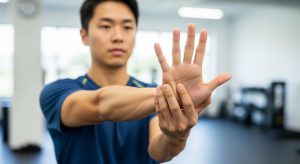
This is a classic forearm stretch that targets the front of the forearm.
How to perform the stretch
- Sit or stand tall with your shoulders relaxed.
- Extend one arm straight out in front of you, palm facing up.
- Keep your elbow straight but not locked.
- With your other hand, gently pull back on the fingers of the extended hand.
- You should feel an inner forearm stretch along the front of the forearm from the wrist toward the elbow.
- Hold the position for fifteen to thirty seconds while breathing slowly.
- Release and repeat on the other side.
Wrist Extensor and Brachioradialis Stretch
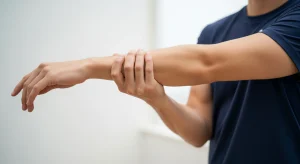
The muscles along the top and outer side of the forearm help lift the hand and stabilise the wrist during pulling or lifting. A stretch wrist extensor exercise and a brachioradialis stretch are especially helpful when this area feels tight.
Wrist extensor stretch
This move is one of the most important arm and wrist stretch routines for people who type a lot or use a mouse throughout the day.
How to perform the stretch of the wrist extensors
- Extend one arm straight in front of you with the palm facing down.
- Keep the elbow straight but relaxed.
- Use your other hand to gently guide the fingers of the extended hand down toward the floor.
- You should feel a stretch in wrist extensors along the top of the forearm.
- Hold the stretch for fifteen to thirty seconds with steady breathing.
- Release and switch sides.
Avoid forcing the wrist. The stretch wrist extensors movement should feel like a firm but comfortable pull, not sharp or painful.
Brachioradialis stretch
The brachioradialis muscle runs along the outer side of the forearm and is heavily involved in gripping and lifting.
How to perform this stretch
- Stand or sit tall and let one arm rest at your side with the thumb facing up.
- Bend your elbow to a ninety-degree angle so your forearm is across your body.
- Use your other hand to gently rotate the forearm so the palm turns toward the floor, then slightly toward the body.
- At the same time, relax the wrist so the hand hangs toward the ground.
- You should feel a gentle brachioradialis stretch along the outer side of the forearm.
- Hold for fifteen to twenty seconds, then relax and repeat on the other side.
You can repeat this brachioradialis stretch two or three times, especially after heavy lifting sessions or gripping activities.
Forearm inner and finger mobility stretches.
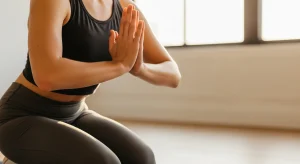
Your fingers and hands are directly connected to the forearm muscles. When the fingers are stiff, the forearm’s inner and outer muscles often work harder. Adding finger mobility to your forearm stretcher routine keeps everything working together.
Prayer stretch for wrist and forearm inner line
This movement opens the forearm inner muscles as well as the wrists and hands.
How to perform the prayer stretch
- Bring your palms together in front of your chest as if you are praying.
- Keep your fingers pointing upward and your elbows lifted.
- Slowly lower your hands toward your waist while keeping your palms pressed together.
- When you feel a forearm stretch along the inner wrist and forearm, hold the position.
- Maintain the stretch for twenty to thirty seconds, then relax.
You can repeat this stretch a few times, especially after long typing sessions.
Fist clench and release
This simple movement teaches the forearm muscles to contract and then fully relax.
How to perform the clench and release exercise
- Hold your arm relaxed at your side.
- Gently close your hand into a firm fist and squeeze for three to five seconds.
- Open your hand wide and stretch your fingers apart.
- Repeat eight to ten times for each hand.
This is a great option when you need a quick forearm stretcher during work or while sitting on transit.
Tabletop and body weight forearm stretcher variations
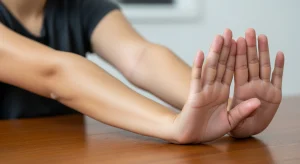
Once the basic forearm stretch movements feel comfortable, you can add body weight variations to deepen the stretch and reach different angles.
Tabletop forearm stretch
This movement targets both the front and back of the forearm, depending on how you place your hands.
Palms facing back
- Stand at a table or counter.
- Place your palms flat on the surface with your fingers pointing toward your body.
- Straighten your elbows while keeping your shoulders relaxed.
- Slowly lean your body back until you feel a forearm stretch along the inner line and wrist.
- Hold for twenty to thirty seconds, then relax.
Backs of hands on the table
- Turn your hands so that the backs of your hands rest on the table, with your fingers pointing toward your body.
- Keep your elbows straight and gently lean back again.
- You should feel the stretch wrist extensors along the top of the forearm.
- Hold for fifteen to twenty seconds, then relax.
These tabletop options create a strong forearm stretcher effect, so move slowly and reduce the depth if you feel any pain.
Tips for safe and effective forearm stretching
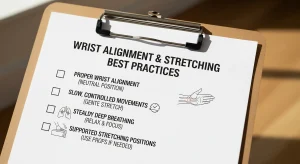
To get the most out of your forearm loosening stretches, technique and consistency matter just as much as the movements themselves.
Key tips:
- Keep your wrist, hand, and forearm aligned to avoid extra joint stress.
- Avoid bouncing and move slowly and smoothly.
- Hold each stretch for fifteen to thirty seconds with steady breathing.
- If your forearms hurt from lifting, start gently and increase the stretch gradually.
- Use support like a cushion or desk if holding your arm up feels tiring.
A guided stretching app such as WeStretch can help you remember your routine, show clear demonstrations, and track your progress over time.
Building a daily routine when your forearms hurt from lifting
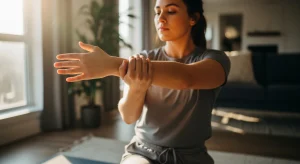
By adding small moments of movement throughout your day, your forearms get the consistent relief they need to recover and stay strong. These short sessions help reduce tension, improve mobility, and prevent that familiar ache when your forearms hurt from lifting.
Start with gentle stretches, listen to your body, and build a routine that feels sustainable. If you are ever unsure how to stretch forearms safely after an injury or flare-up, reach out to a medical or physical therapy professional for guidance.
Frequently Asked Questions
How do you stretch your forearms?+
Extend your arm with the palm down and gently pull your fingers toward the floor until you feel a stretch. Flip your palm up to stretch the inner side.
Why are my forearm muscles always tight?+
They tighten from repetitive tasks like typing, lifting, or gripping. Poor posture and limited movement breaks can make the tension worse.
How do you release forearm pain?+
Use gentle stretches such as wrist flexor and extensor stretches, and a brachioradialis stretch. Massage and warm water can help ease discomfort.
How do you warm up your forearms?+
Do light wrist circles, open and close your hands, and rotate your forearms slowly. This increases blood flow before deeper stretching.