Exercise for Back Pain During Pregnancy
By WeStretch Editorial Team9 min read
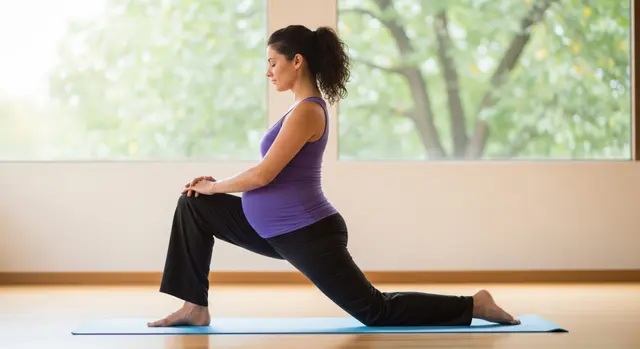
Back pain during pregnancy is incredibly common, and it can affect everything from your posture to your sleep. The right exercise for back pain during pregnancy can help reduce soreness, improve mobility, and support your growing belly. Movement doesn’t need to be intense or complicated to make a difference; it simply needs to be gentle, consistent, and aligned with what your body needs in each trimester.
If you have noticed difficulty in standing up smoothly, bending down to pick something up, or aching after sitting, these are early signs that your mobility needs support.
At WeStretch, we focus on safe, accessible movement that meets you exactly where you are. Pregnancy doesn’t have to mean losing the ability to move comfortably. With the right daily mobility work, you can maintain the freedom to do what you love. This guide walks you through effective prenatal-friendly exercises, why they help, and how to stretch with confidence even on days when you feel tight, tired, or uncomfortable.
Why Pregnancy Causes Back Pain
When rolling over in bed becomes a two-step maneuver, getting up from the couch takes more effort than it should, and your back twinges every time you lift something light – your body is telling you it needs support. As your body shifts to accommodate your baby, several changes affect the spine:
- Increased curvature in the lower back
- Looser ligaments due to relaxin
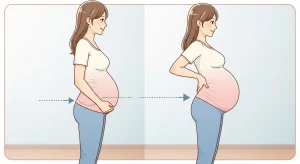
- A growing belly that shifts your center of gravity
- Pelvic instability
- Posture changes from day to day due to fatigue
These changes can create tightness, especially in the lumbar spine, hips, and glutes. Choosing the right exercise for back pain during pregnancy helps reduce tension and improve muscle support in those areas.
Before You Begin: Safety Tips for Prenatal Exercise
Your body is carrying more weight, circulating more blood, and working significantly harder. Safe movement matters.
General guidelines:
- Move slowly and intentionally.
- Stop if something feels sharp or unstable.
- Keep breathing steady (never hold your breath).
- Choose movements that support your belly rather than compress it.
- Avoid deep twists that restrict your abdomen.
- Use support such as pillows or walls when needed.
Once you’re cleared by your healthcare provider, simple movements can bring a lot of relief.
The Best Exercises for Back Pain Relief During Pregnancy
Below you’ll find a range of safe, supportive exercises. Each one helps address a different cause of back pain, from tight hips to weak core support to stiff spinal muscles.
1. Pelvic Tilts Against a Wall

Pelvic tilts strengthen your deep core and stabilize your pelvis. This creates better support for the lumbar spine.
How to do it:
- Stand with your back against a wall.
- Gently tuck your pelvis.
- Press your lower back toward the wall.
- Release slowly.
- Repeat for 10–15 controlled reps.
This movement is one of the best ways to start easing discomfort, and it pairs well with any exercise for back pain during pregnancy routine.
2. Cat–Cow on Hands and Knees
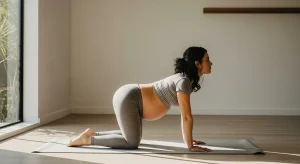
This traditional mobility exercise alleviates stiffness throughout the entire spine.
How to do it:
- Begin on hands and knees with a neutral spine.
- Arch gently upward, then lower slowly into extension.
- Keep the movement small and controlled.
Cat–Cow is a simple exercise during pregnancy for back pain because it supports alignment without strain on the belly.
3. Supported Child’s Pose
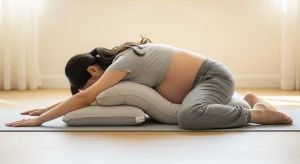
This position opens the lower back and hips, reducing tension around the sacrum.
How to do it:
- Kneel wide with toes touching.
- Place pillows under your chest and belly.
- Let your hips sink back.
- Rest for 20–40 seconds.
A child’s pose brings significant relief and pairs well with other back exercises for lower back pain during pregnancy because it reduces pressure, instead of adding to it.
4. Seated Hip Lean Stretch

Your hips play a major role in back pain. When they’re tight, your back compensates.
How to do it:
- Sit comfortably on a chair.
- Cross one ankle over the opposite knee.
- Lean forward slightly until you feel a stretch in the hip and glute.
- Switch sides.
This is one of the best exercises for lower back pain during pregnancy, especially in the second and third trimesters.
5. Side-Lying Leg Lifts
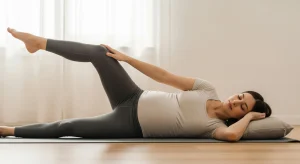
These strengthen the gluteus medius, a muscle that stabilizes the pelvis and prevents one-sided back tension.
How to do it:
- Lie on your side with knees slightly bent.
- Lift the top leg gently.
- Lower it slowly.
- Complete 10–12 reps on each side.
These are effective for balancing the pelvis, which is essential when choosing any exercise for back pain during pregnancy.
6. Wall-Assisted Squats
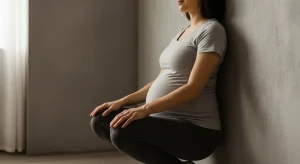
Squats support glute strength, which directly reduces lumbar strain.
How to do it:
- Lean against a wall.
- Slide down into a squat.
- Hold for a few seconds.
- Rise back up smoothly.
This is considered one of the best exercises for back pain during pregnancy options for those needing stability and strength.
7. Gentle Standing Side Stretch
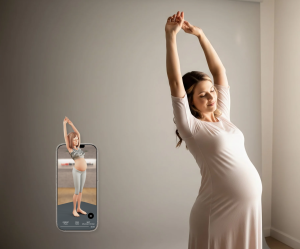
Side body tightness can contribute to back discomfort. This stretch improves mobility between the ribs and hips.
How to do it:
- Stand with feet hip-width apart.
- Reach both arms overhead.
- Lean gently to one side.
- Switch after 20–30 seconds.
This movement works well as part of a larger prenatal-safe stretching session.
8. Quadruped Arm and Leg Reach (Bird Dog)
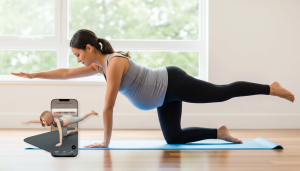
Bird Dog strengthens the core and stabilizes deep spinal muscles.
How to do it:
- Begin on hands and knees.
- Reach one arm forward and the opposite leg back.
- Keep hips level.
- Switch sides.
This is a top recommendation among exercises for lower back pain during pregnancy because it activates the muscles that support the spine without placing strain on your abdomen.
Additional Stretches That Support Pregnancy Back Pain Relief
These movements give your back more space and reduce pressure built up throughout the day.
Hip Flexor Release with a Pillow
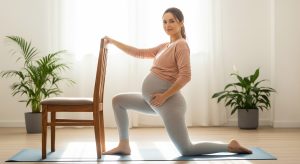
Hip flexors often tighten more as your belly grows. When they pull forward, your lower back increases its curve, leading to soreness.
How to do it:
- Kneel with one knee on a pillow.
- Step forward with the opposite leg.
- Gently shift your weight forward to open the front of your hip.
Use a chair for balance if needed.
Figure-Four Stretch (Modified for Pregnancy)
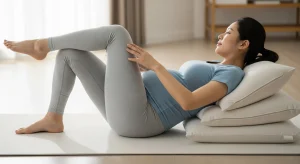
This loosens deep gluteal muscles that contribute to sciatic-style discomfort.
How to do it:
- Lie on your back with knees bent.
- Use pillows to elevate your upper body if needed.
- Place your ankle over your opposite knee.
- Pull the supporting leg gently toward your chest.
Remember to breathe steadily and move carefully.
Side-Lying Spinal Release

Instead of twisting through the abdomen, this uses gravity to gently decompress the spine.
How to do it:
- Lie on your side with a pillow between your knees.
- Let your top shoulder fall slightly backward.
- Keep hips stacked.
Hold for 20–40 seconds.
How Consistent Movement Helps Throughout Pregnancy
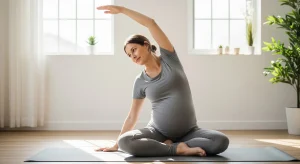
Your body adapts every week. The right exercise for back pain during pregnancy helps you:
- Maintain a healthy posture
- Support your growing belly
- Strengthen the deep core
- Relieve tight hips and hamstrings
- Improve circulation
- Prepare your body for childbirth
Movement also helps reduce stress and boosts energy, two things every pregnant person can appreciate.
Lifestyle Adjustments That Make a Difference
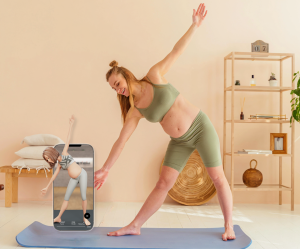
Even small daily habits can either contribute to pain or reduce it.
Try adjusting:
Your posture
Keep your ribs stacked over your hips rather than leaning backward.
Your sleep position
Use extra pillows to support your belly and knees.
Your daily movement
Getting up every 30–60 minutes helps prevent stiffness.
Your hydration
Pregnant bodies need more water to support spinal discs and muscle recovery.
These small shifts complement all your exercise options for back pain during pregnancy.
How WeStretch Supports Prenatal Mobility
Alt text:
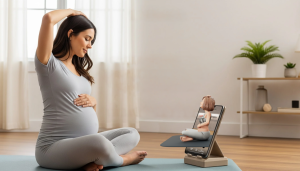
Stretching with confidence becomes easier when you don’t have to guess what movements are safe. WeStretch offers:
- Guided, customizable, and pregnancy-friendly routines
- 6,700+ physio-informed movements
- Gentle options for low-energy days
- Progressions as your pregnancy moves from one trimester to the next
Mobility is one of the simplest tools you have to stay comfortable and able throughout pregnancy. A few minutes a day using our app is enough to ease stiffness, support posture, and help your body move the way it’s meant to.
How to Tailor Your Routine to Each Trimester

Your stretching and strengthening needs shift as your baby grows. Here’s what to expect:
First Trimester
Fatigue and morning sickness may limit how much exercise you want to do. Gentle mobility helps reduce tension caused by early hormonal changes. Light movements like hip circles and pelvic tilts are excellent starting points.
Second Trimester
Energy often increases, and your belly becomes more noticeable. This is a great time to establish a routine focused on stability. Guided exercises inspired by pregnancy-safe movements, including supported squats, side stretches, and glute activation, help maintain alignment and ease back pain.
Third Trimester
Balance becomes more challenging, breathing space changes, and back discomfort may intensify. Choose movements that feel grounding. Supported child’s pose, elevated stretches, and chair-based exercises help reduce strain. This is also the trimester where many find the best exercises for lower back pain during pregnancy to be the simplest ones they can repeat consistently.
How Back Pain Changes and What to Do
Low Back Pain From Posture Shifts
Your center of gravity shifts forward as your belly grows.
Helpful exercises: pelvic tilts, cat–cow, Bird Dog.
Glute Tightness and Sacral Pain
When the glutes tighten, the sacrum doesn’t move freely.
Helpful exercises: figure-four stretch, hip releases, side-lying leg lifts.
Sciatic Nerve Discomfort
This often happens when the piriformis gets tight.
Helpful exercises: modified seated figure-four, standing hip stretch.
These strategies keep you supported across all trimesters.
How to Build a Daily Prenatal-Friendly Routine
A great place to begin is:
- 5 minutes of mobility (cat–cow, hip circles)
- 5 minutes of strength activation (Bird Dog, leg lifts, wall squats)
- 3–4 minutes of stretching (side bends, supported child’s pose)
Even 10 minutes helps, making it realistic to include regular exercise for back pain during pregnancy without exhaustion.
When to Stop and Call Your Healthcare Provider
Stop immediately and seek care if you experience:
- Sharp abdominal pain
- Vaginal bleeding
- Dizziness
- Regular painful contractions
- Fluid leakage
- Numbness or loss of movement
Back pain relief should always feel supportive, not alarming.
A Supportive Path to Prenatal Comfort
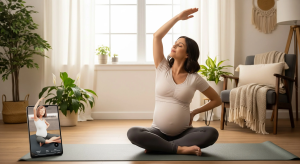
The right exercise for back pain during pregnancy can help you feel more mobile, more supported, and more connected to your changing body. With gentle movement, strengthened stabilizer muscles, and consistent stretching, relief is absolutely possible, even in the later stages of pregnancy.
You don’t need a long workout to make an impact. A few minutes of focused movement each day can change how your back feels and functions.
When you’re ready for routines designed around comfort, ease, and real-life pregnancy needs, WeStretch is here to guide you.
Sign up for our free trial today!
Frequently Asked Questions
Is it safe to exercise for back pain during pregnancy in every trimester?+
Yes, but the type of movement should change as your pregnancy progresses: gentle mobility works well in the first trimester, while supported, grounding stretches suit the third.
How often should I do these back pain exercises during pregnancy?+
Even a short daily session of about 10 minutes, mixing mobility, gentle strengthening, and stretching, is enough to notice a difference.
When should I stop exercising and call my doctor?+
Stop right away if you feel sharp abdominal pain, dizziness, vaginal bleeding, fluid leakage, or regular painful contractions.
Can stretching alone fix pregnancy-related back pain?+
Stretching helps a lot, but it works best combined with posture awareness, supportive sleep positions, and regular movement breaks. Guided, pregnancy-friendly routines like those in WeStretch take the guesswork out of what's safe.